Epoxy Flooring in Buffalo Grove, IL, Built on a Tested Slab

We grind the concrete, test it for moisture in writing and quote the product, coat count and thickness before any resin goes down.

Buffalo Grove Epoxy Flooring has spent more than 20 years putting resin floors on concrete in Buffalo Grove, IL, from two-car garages and finished basements to office lobbies, labs, warehouse bays and commercial kitchens. Our work covers epoxy garage floors, polyaspartic coatings, flake and metallic systems, polished concrete, concrete grinding and repair, and static-control floors for electronics work.

Every one of those starts the same way. We open the slab with a diamond grinder or a shot blaster, test it for moisture in writing, map the cracks and old coatings, and only then price the floor. The proposal names the product line, the number of coats and the finished thickness, so you can hold the finished floor up against the quote.

That order matters on the concrete we see here. Most homes in the village were built in the 1970s and 1980s, many garage slabs were poured without a vapor retarder beneath them, and the commercial floors along the business parks carry decades of sealers, adhesives and forklift wear. A coating is only as good as what we learn about the slab before it goes down.

Get Your Free Quote

Fast response • No obligation

So we can reach you about your request.

So we can send you a confirmation after you submit this inquiry form.

  • 20+ Years in Business
  • Moisture Test in Every Scope
  • Diamond-Ground, Never Acid-Etched

What we do

Our Services

Epoxy flooring for Buffalo Grove, IL garages, basements and businesses

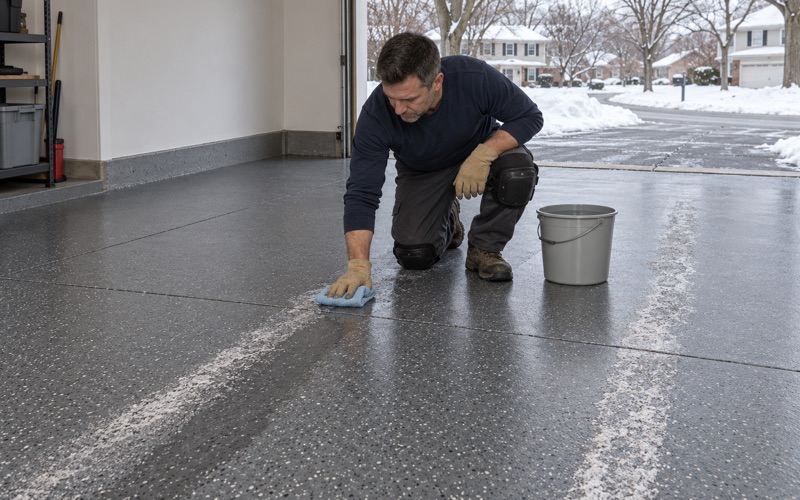
Dried road-salt residue wiped off a solid charcoal epoxy garage floor in a Buffalo Grove colonial on a winter day.

Epoxy Garage Floor

A ground, moisture-tested epoxy garage floor for Buffalo Grove homes, built in layers to resist road salt, hot tires and winter grime.

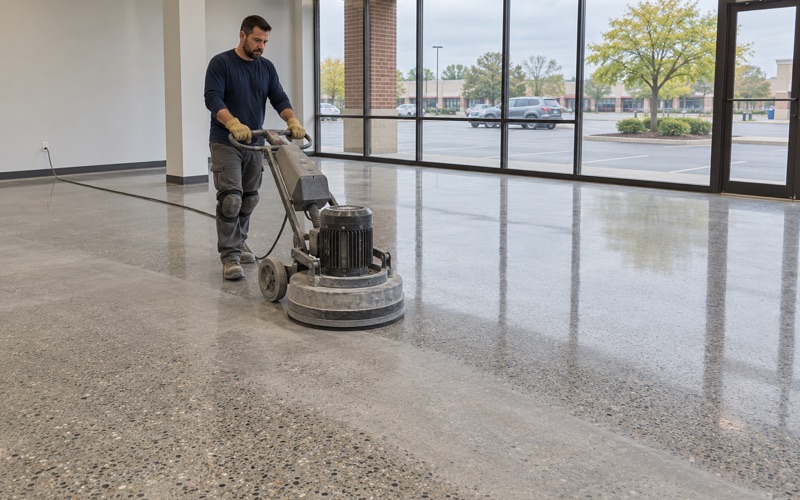
A walk-behind polisher bringing a ground concrete floor to a clear gloss in an empty Buffalo Grove retail space.

Polished Concrete Floors

Polished concrete for Buffalo Grove businesses and homes, ground in stages, densified with lithium silicate and finished to a chosen sheen.

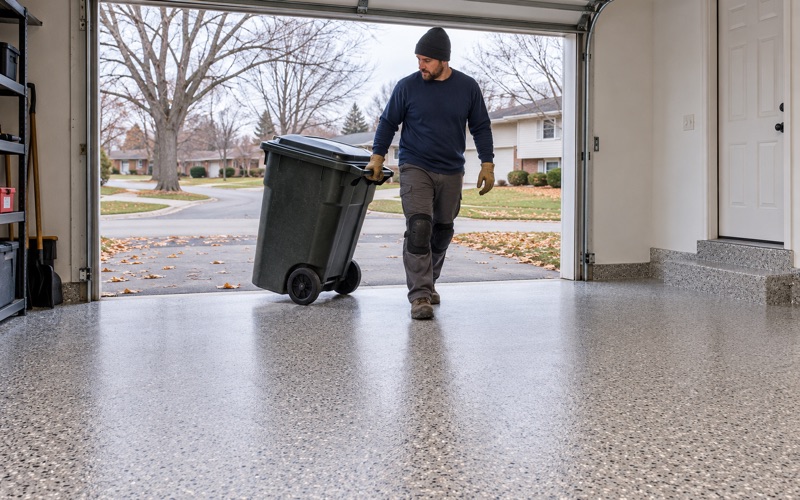
A garbage cart rolled back into a Buffalo Grove garage on its same-day polyaspartic flake floor on a cold fall afternoon.

Polyaspartic Floor Coating

Fast-curing, UV-stable polyaspartic floor coatings for Buffalo Grove garages, basements and commercial floors, applied over ground, tested concrete.

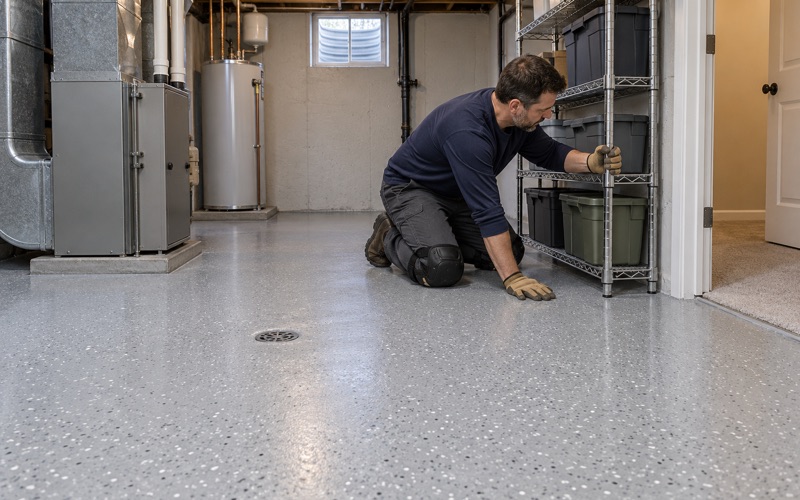
A wire storage shelf set square on a new light gray basement floor beside the furnace in a Buffalo Grove colonial.

Basement Floor Epoxy

Basement floor epoxy for Buffalo Grove homes, planned around a moisture test, sump and drain details, and an honest read of past water.

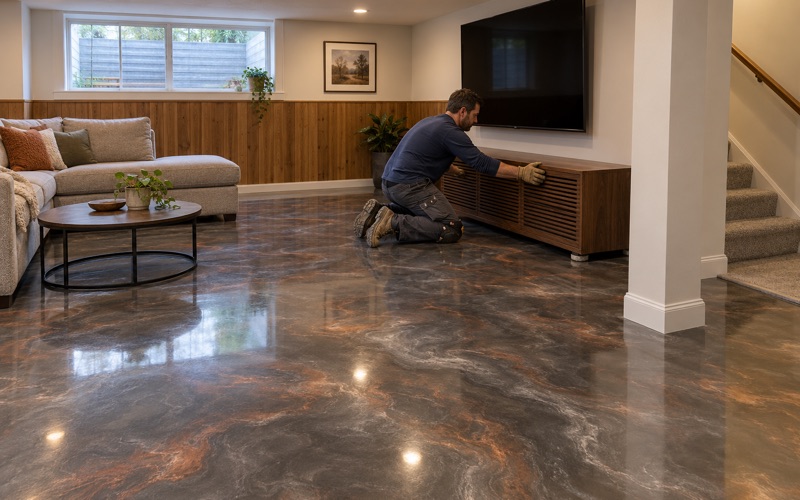
A low media cabinet slid back onto a swirled pewter and copper metallic epoxy floor in a Buffalo Grove lower-level family room.

Metallic Epoxy Floor

Hand-worked metallic epoxy floors with marbled, pearlescent depth for Buffalo Grove basements, garages, showrooms and offices.

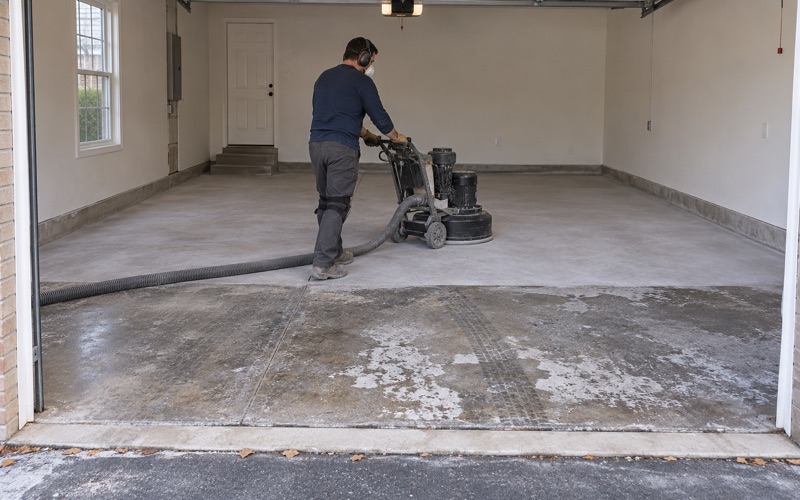
A walk-behind grinder with a dust shroud opening up the old sealed slab of an attached Buffalo Grove garage.

Concrete Grinding

Diamond grinding and shot blasting for Buffalo Grove slabs: coating and mastic removal, flattening and a measured surface profile, dust captured at the tool.

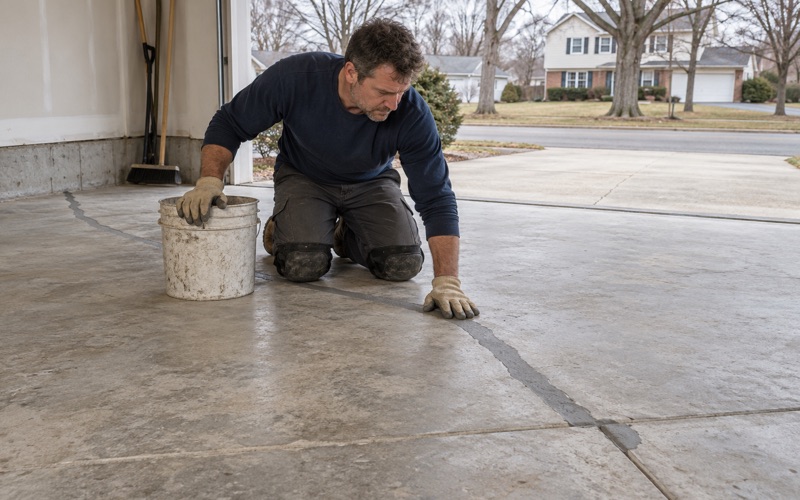
A chased crack filled flush with gray repair mortar in the ground slab of a Buffalo Grove garage, ready for coating.

Concrete Floor Repair

Crack, spall, joint and salt-scaling repair for Buffalo Grove garage, basement and commercial slabs, done before a coating goes down.

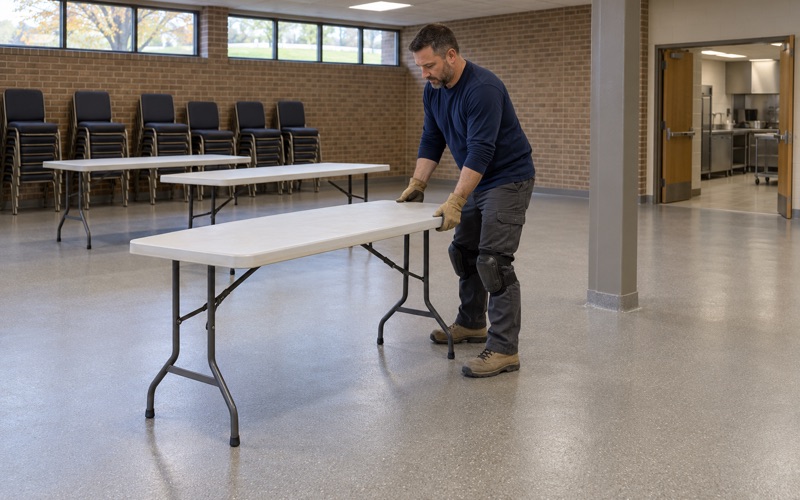
A folding table opened on a quartz-textured fellowship hall floor in a Buffalo Grove church.

Commercial Epoxy Flooring

Commercial epoxy flooring for Buffalo Grove offices, stores, labs and flex buildings, installed in phases so the business keeps running.

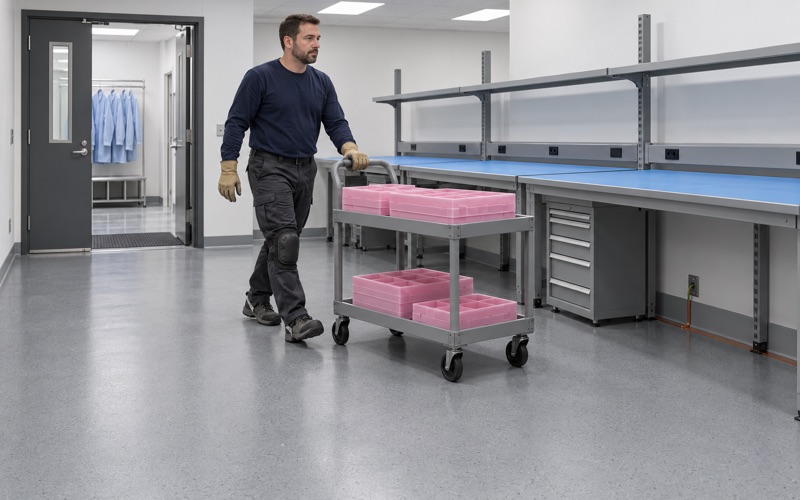
A parts cart rolled across a static-dissipative floor past a grounding strip in a Buffalo Grove electronics assembly room.

ESD Flooring

Static-dissipative and conductive resin floors for Buffalo Grove electronics, lab and assembly spaces, grounded and tested to your spec.

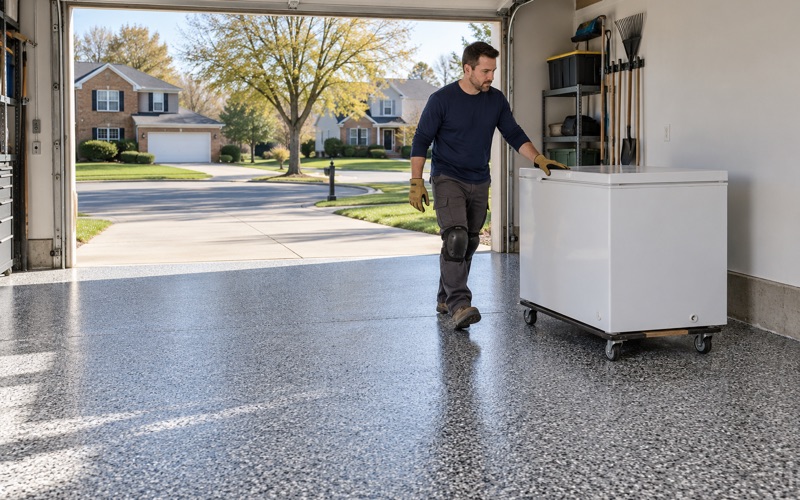
A chest freezer eased back on a dolly onto a full-broadcast granite-look flake floor in a Buffalo Grove garage.

Flake Epoxy Floor

Vinyl flake epoxy floors for Buffalo Grove garages, basements and shops, with chip blend, size, coverage and texture chosen and written down.

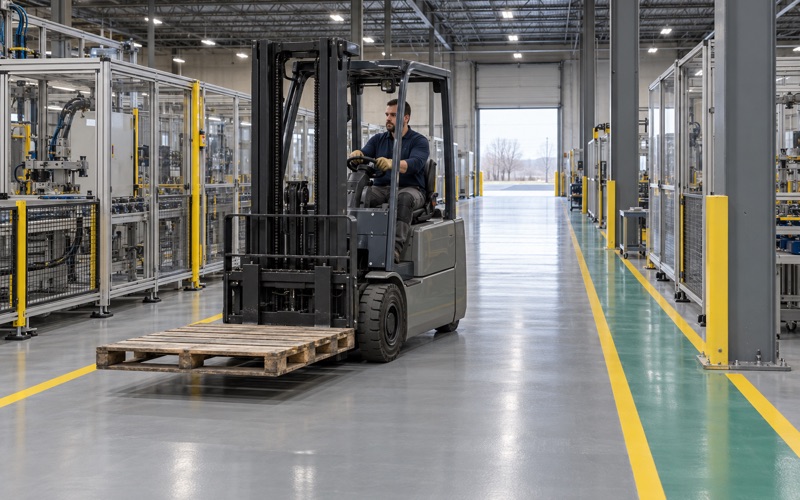
A forklift driven down a striped aisle of a heavy-duty epoxy floor in a Buffalo Grove light manufacturing plant.

Industrial Epoxy Flooring

Heavy-duty industrial epoxy for Buffalo Grove plants, warehouses and shops: thick builds, chemical-resistant topcoats, armored joints and safety lines.

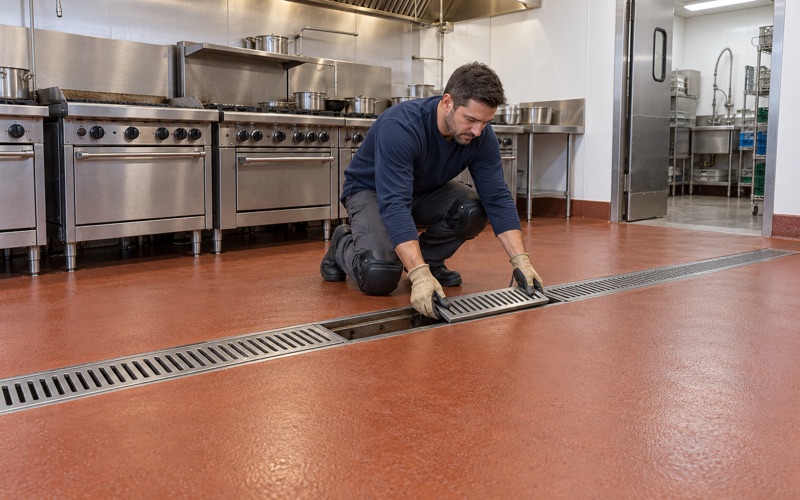
A stainless trench drain grate lowered back into a coved urethane cement floor in a Buffalo Grove restaurant kitchen.

Commercial Kitchen Flooring

Seamless, coved and slip-resistant kitchen floors for Buffalo Grove restaurants, bakeries and cafes, installed overnight or between services.

Twenty Years of Floor Coating Work

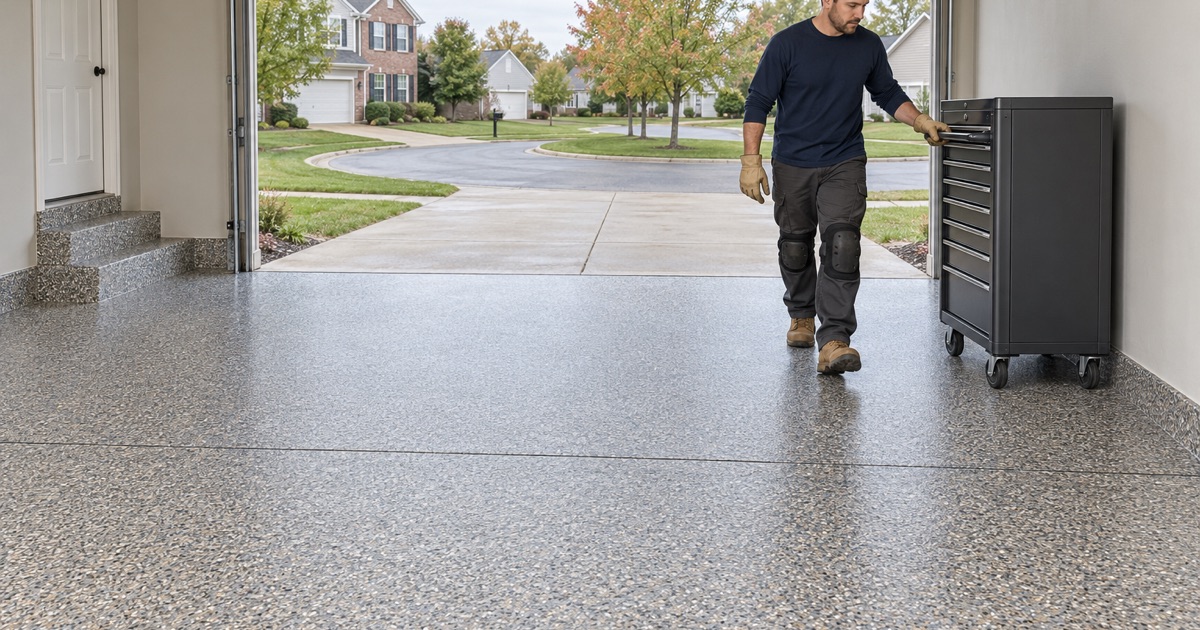
A rolling tool chest pushed into place on the new gray and tan flake floor of an attached Buffalo Grove garage.

More Than 20 Years in Business

We have been in the floor coating business for more than two decades. That time shows up less in a slogan than in the questions we ask before quoting: what is under the slab, what has been spilled or sealed on it, how the room is heated, and who needs to walk or drive on it first.

Why Choose Buffalo Grove Epoxy Flooring

Ground Concrete, Never Etched

No floor we coat is prepared with acid. A diamond grinder or shot blaster cuts the slab to the concrete surface profile the coating maker specifies, so the resin locks into sound concrete rather than sitting on a weak, residue-coated skin the way an etched floor does.

Moisture Tested in Writing

Every proposal includes a moisture test before the price is final, because many Buffalo Grove garage slabs were poured under a code exception that skips the vapor retarder. A reading taken first means a coating that would trap vapor gets caught on paper rather than discovered when it lifts.

A Quote You Can Check

The proposal states the product line, the coat count and the finished thickness of the floor. Should a question come up later, you can compare what was installed with what was promised, rather than relying on a contractor’s word that a bargain floor was the same system.

Cure Timed to the Slab

Cure schedules follow slab temperature and the dew point spread at the surface. With well over a hundred freezing nights a year around the village, an unheated garage in deep winter is told to wait for warmer weather rather than coated on a calendar date and left to cure badly.

Village Rules Checked First

Buffalo Grove requires every contractor to register each year, and permit questions go to Community Development before a date is set. The village spans Cook and Lake counties, so we confirm the details for the address in front of us rather than assuming one county’s answer covers the whole village.

The Garage Floor, Start to Finish

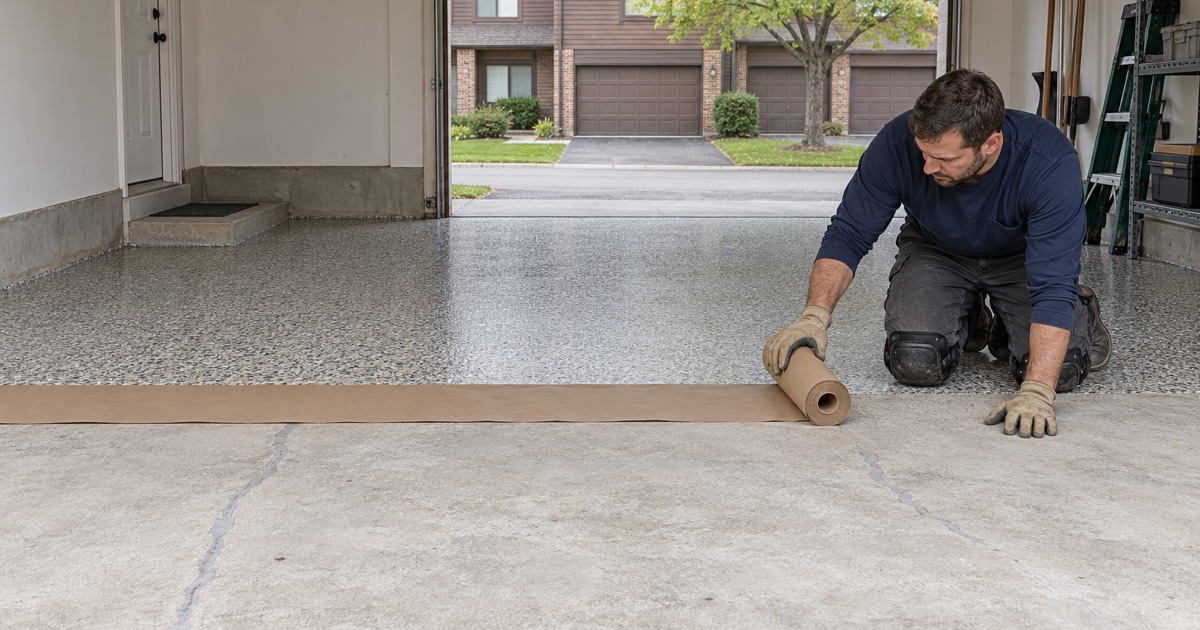
A Buffalo Grove townhome garage at two stages: the back half finished in flake, the front half ground bare with its cracks filled.

How an Epoxy Garage Floor Job Runs

A garage job starts with a walk of the slab, a moisture test and a written proposal. On install days we grind, vacuum, repair cracks, lay the base coat and broadcast, then seal it with a topcoat. You get the dates for foot traffic and for parking before we start.

Attached Garages and Keeping Dust Out of the House

Most Cook-side houses in the village have an attached garage, so the house door matters. We capture grinding dust at the machine with a vacuum, seal the house entry during work, and ventilate through the overhead door so coating odor moves outside rather than into the kitchen.

Garage Slabs Without a Vapor Retarder

Buffalo Grove builds to the 2018 International Residential Code, adopted by Ordinance 2018-055, and the model garage exception lets a garage slab go in without a vapor retarder. The village’s own detached-garage handout lists four inches of slab over four inches of compacted stone and names no sheeting, which is why we test before we coat.

Townhome and Condominium Garage Coatings

About one home in seven here is a townhouse-style attached unit, and many more sit in condominium buildings. We confirm association rules on contractors, hours and shared driveways before scheduling, and we plan where our equipment parks so a neighbor can still get a car out.

Testing a Garage Slab for Moisture

Depending on the slab, we use an ASTM D4263 plastic sheet test, an ASTM F1869 calcium chloride test, or ASTM F2170 relative humidity probes set into the concrete. The method and the result go into the written scope, and the coating maker’s limit decides whether the slab passes.

Cracks, Spalls and Pitting in an Older Slab

We map every crack, spall and pitted patch before pricing. Hairline shrinkage cracks are routed and filled, spalled edges near the door are rebuilt, and when a slab has heaved, broken through or settled badly, we say plainly that it should be replaced before anyone coats it.

Winter Brine and Rock Salt on Bare Concrete

Calcium chloride, rock salt and brine ride in on tires all winter and soak into bare concrete. Repeated wetting and freezing then scales the surface. We choose garage systems that hold up to that salt load and give the floor a topcoat that can be rinsed clean in spring.

Cold-Weather Coating and Unheated Garages

Resin needs a slab warm enough to cure and a surface safely above the dew point. Freezing nights here run from mid-autumn to mid-spring, so an unheated garage may simply need to wait. We would rather move your date than install a floor that cures soft or blushes.

Hot Tire Pickup and Thin Coatings

A tire driven in hot from the road softens a thin or poorly bonded coating, and when the car pulls away the coating comes up with it. A ground surface, a full-thickness 100% solids epoxy base and a hard topcoat are what keep a warm tire from lifting the floor.

Store-Bought Kits Compared With a Built-Up Floor

A kit from a home center is usually a thin waterborne coat rolled over an etched or simply cleaned slab. Our floors are ground to profile, built in layers to a stated thickness and broadcast for texture, which is the difference between a paint film and a floor system.

What an Epoxy Garage Floor Costs

Price follows the slab. Crack and spall repair, removing an old coating, the moisture result, a mitigation primer, flake or metallic finishes and the topcoat choice all change the number. Each appears as its own line in the proposal so nothing is hidden in a single total.
Basements, Sump Pits and Damp Slabs

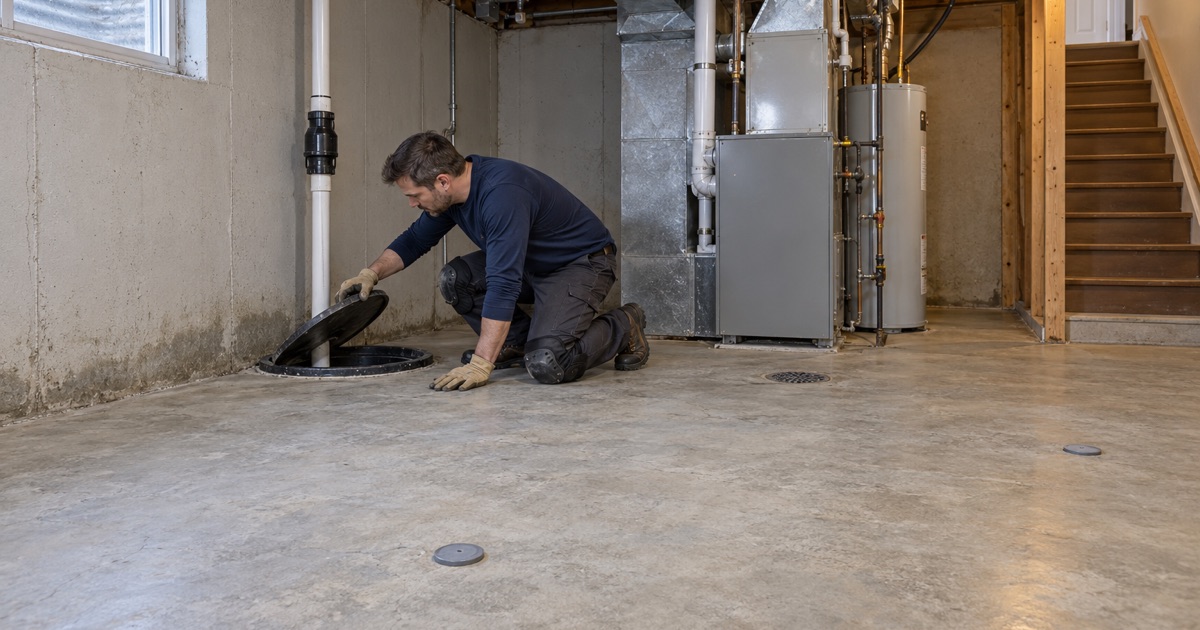
The sump basin lid lifted in the bare basement of a Buffalo Grove split-level, with a damp band along the wall and a capped moisture probe in the slab.

Basement Floor Coatings and the First Question

On the Cook side most houses have a full or partial basement, and every basement floor starts with one question: how much moisture is coming through it? We read the slab for past water, test it, and choose a system to match the result rather than the paint chip a customer likes.

Old Paint, Patching and Tile Mastic

Many basements carry layers of floor paint, patch compound and black adhesive from old tile. Each has to come off before a new coating can bond, so we grind or strip down to sound concrete and test any mastic old enough to raise an asbestos question before we disturb it.

Sump Pits, Floor Drains and Ejector Pumps

Buffalo Grove code sends basement floor drains through a sump to the sanitary sewer. We coat around drains, sump lids and ejector pits with clean terminations, keep grinding dust out of them, and leave access to every cover so a plumber never has to cut the floor.

Coating After Water Gets In

If a basement has flooded or leaked, the source gets fixed and the slab gets dried before anything is coated. Buffalo Creek is the main flood source on the Cook side of the village, and a floor coating is no defense against it. We test again after drying rather than trusting a calendar.

White Powder and Efflorescence

White powder on a basement floor is usually efflorescence, salts carried to the surface by moisture moving through the concrete. It tells us water is traveling through that slab. We remove it, find the moisture source and retest, because coating over efflorescence gives the resin a crumbly base.

When a Moisture-Mitigation Primer Is Needed

When readings run above what a standard base coat tolerates, a moisture-mitigation primer rated for the measured level can go down first. We price it as its own line, name the product, and tell you what level it is rated for so the decision rests on a number.

Laundry Rooms, Workshops and Home Gyms

A coated basement floor can serve as a laundry room, a workbench area or a home gym. Laundry areas get a texture that stays grippy when wet, workshops get a thicker build for dropped tools, and gym zones get a coating that rubber mats will not stain.

What a Coating Warranty Leaves Out

Warranties on floor coatings commonly exclude failure caused by moisture vapor transmission and hydrostatic pressure. We name that exclusion first, explain any others in the product warranty, and do it before the job is sold so the warranty never surprises you later.

Not Radon Mitigation, Not Waterproofing

A floor coating is not radon mitigation, and in Illinois radon mitigation is licensed work regulated by IEMA. It is not waterproofing either. If you have a radon or seepage concern, that work comes first from the right trade, and the coating follows once the slab is ready.

Color, Flake and Finish

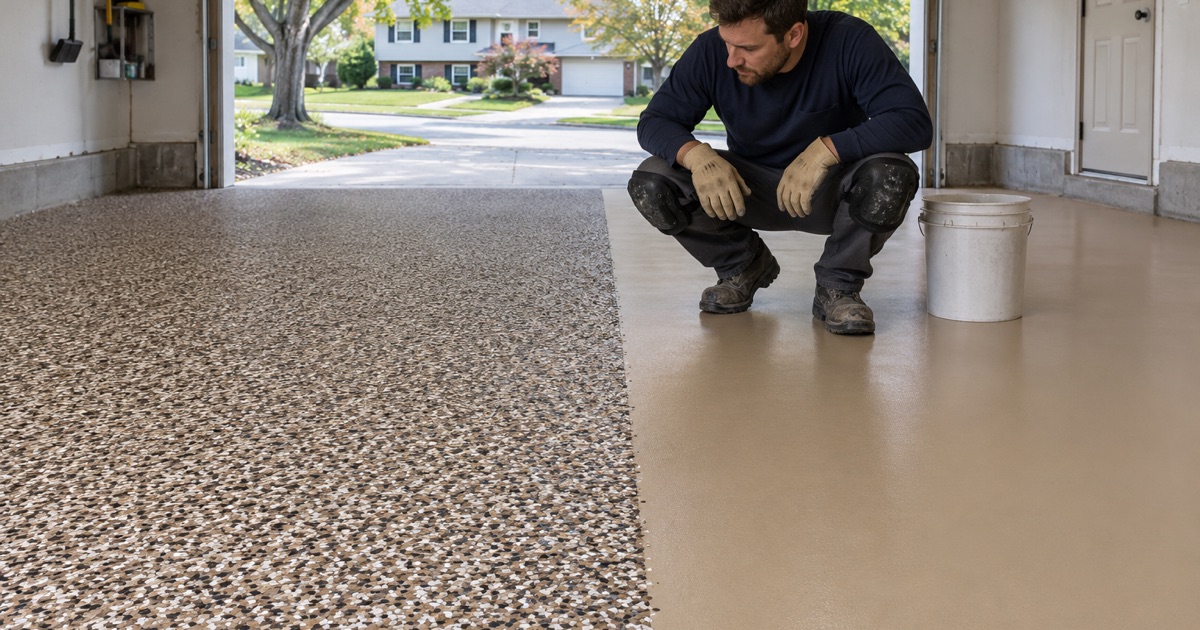
A finisher crouching where a dense espresso, tan and white flake blend meets the bare base coat in a Buffalo Grove garage.

Vinyl Flake Blends and Chip Sizes

A vinyl flake broadcast hides dust, small stains and the texture of an older slab. Larger chips read bolder and show the pattern from the doorway, while smaller chips give a tighter, granite-like look. We show real samples and broadcast to full coverage or a lighter scatter as you choose.

Metallic Epoxy and Marbled Floors

Metallic epoxy uses pigments that move as the resin is worked, leaving a marbled, three-dimensional finish. It depends on a flat, well-ground slab, the right working time and an installer who handles the pattern by hand, so we plan it for rooms where it will be seen.

Polished Concrete and Aggregate Exposure

Polished concrete is ground in stages, densified with lithium silicate and polished to the sheen you choose. A light grind keeps a cream finish, while a deeper cut exposes the stone in the slab. We grind a test area first so you see the aggregate before committing.

Gloss, Satin or Matte Topcoats

A high-gloss topcoat brightens a room but shows dust, scratches and tire marks. Satin and matte sheens hide everyday wear better and keep slip texture easier to see. We help you match the sheen to how the floor is actually used.

Quartz Broadcast Floors

Colored quartz aggregate broadcast into the base coat gives a floor both color and grip in one step. It suits commercial kitchens, ramps and wet areas, and the size of quartz we choose sets how much texture you feel underfoot.

Solid Color Coatings

Sometimes a plain floor is the right one. A solid gray or tan coat suits shops, utility rooms and storage areas where you want to see a dropped screw or a leak quickly, and it keeps the system simple to repair later.

Sunlight, Ultraviolet and Ambering

Many epoxies amber and yellow under ultraviolet light from an open garage door or a sunny window. Where the floor sees sunlight, we top it with a polyaspartic or polyurea coat that holds its color, and we say which layer carries that protection.

Saw-Cut Lines, Borders and Logos

Saw-cut lines can divide a large floor into tiles, mark parking stalls or follow existing control joints. Borders and simple logos can be set in a second color during the base coat, so the design is part of the floor instead of a decal on top.

Corporate Parks, Shops, Kitchens and Warehouses

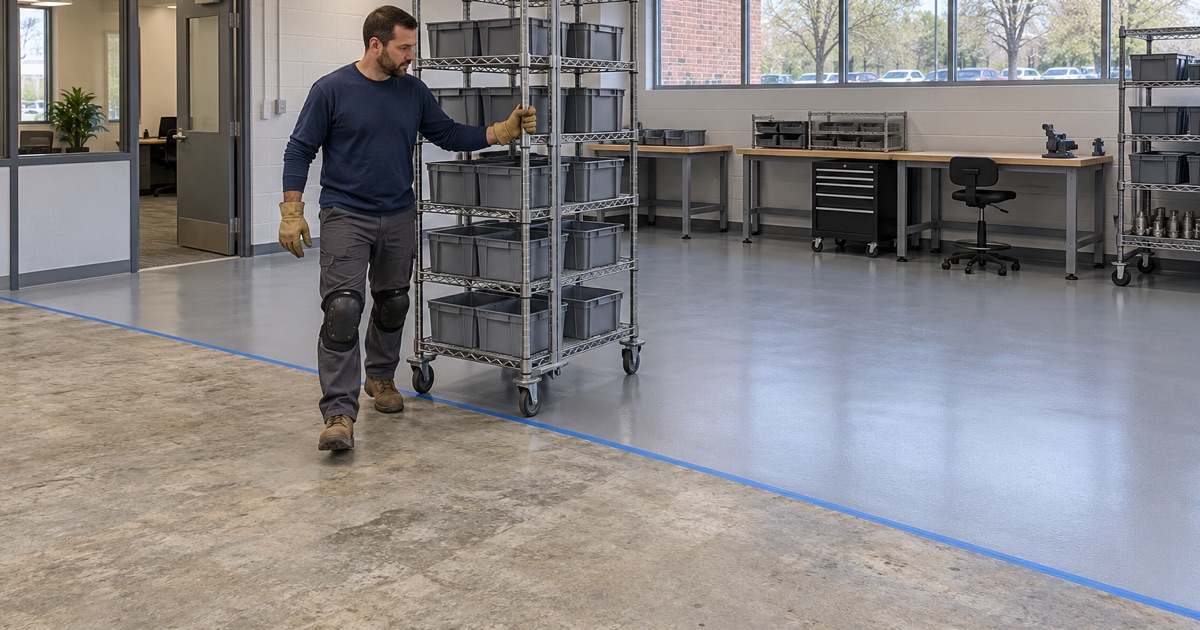
A parts rack moved onto the cured half of a flex-building floor coated in phases in a Buffalo Grove business park.

How Commercial Floor Work Differs

A commercial job adds operating hours, safety rules, tenant coordination and often a specification written by someone else. We read that spec, ask for the slab’s history and test it, then phase the work so the floor goes in without closing the building longer than it must.

Office, Lab and Research Floors

Buffalo Grove’s largest employers sit in corporate and light industrial buildings, including Siemens Building Technologies. Lobbies, break rooms, labs and mechanical rooms each need a different system, from a decorative flake in a corridor to a chemical-resistant coat in a lab.

Static-Control Floors for Electronics Work

Where a spec calls for electrostatic discharge control, we install static-dissipative or conductive flooring with a grounding plan and test it against the resistance range the spec names. It belongs in electronics assembly and test areas, not as a default in rooms that do not need it.

Warehouse and Flex-Bay Floors

Corporate Grove alone spans about 200 acres, and older bays such as those along Johnson Drive date to the 1980s. Forklifts and pallet jacks wear coatings at joints and turning points, so we fill joints, build thickness where traffic concentrates and choose a system that can be recoated.

Restaurant and Bakery Kitchens

Food businesses here answer to the village’s own Health Officer under Chapter 8.08, with plan review by the village. We build the coved base where floor meets wall that FDA Food Code 6-201.13 describes and confirm the reviewer’s expectations for the address before installing.

Urethane Cement Where Heat Is Constant

Hot water, steam cleaning and fryer oil soften many epoxies over time. Urethane cement handles thermal shock and constant wet cleaning far better, so we specify it for dish rooms, cook lines and other areas that live under hot water every day.

Retail and Showroom Floors

Stores along Lake Cook Road and Route 83 need floors that look good under display lighting and survive daily shopping-cart traffic. Polished concrete, flake and solid systems all work there, and we schedule around opening hours so the store loses as little selling time as possible.

Auto Repair and Fleet Garage Floors

Service bays deal with oil, brake fluid, hot tires and dropped tools. We use thicker builds, chemical-resistant topcoats and a slip texture set by the broadcast so technicians keep their footing, and we leave trench drains and lift anchors accessible.

Illinois VOC Limits on Floor Coatings

Illinois caps volatile organic content in floor coatings at 250 grams per liter and in industrial maintenance coatings at 340, under 35 Ill. Adm. Code Part 223 Subpart C. Those limits bind whoever applies the product, so we select coatings inside them for every job.

Working Around a Business That Stays Open

Offices, labs, shops and kitchens cannot always close. We phase floors by area, work overnight and on weekends when needed, and pick fast-cure systems where a room must reopen the next morning, so the floor is done without a lost week of business.

Areas We Serve

Buffalo Grove Epoxy Flooring provides epoxy-flooring throughout the greater Buffalo Grove area, with the same crews and the same standards on every job.

Good to know

Frequently Asked Questions

How much does an epoxy floor cost in Buffalo Grove?

We price each floor after we have seen it, because the slab sets the cost more than the square footage does. Crack and spall repair, removal of an old coating, the moisture reading and the system chosen all move the number, and the written proposal lists each one separately so you can see where the money goes.

How long does a garage floor installation take?

Most two-car garages run over consecutive days: grinding and repair first, then base and broadcast, then the topcoat. Foot traffic and vehicle traffic come back on different schedules, and both depend on the slab temperature during the cure, so we give you the dates in writing once the system is picked.

Is your company licensed to install epoxy floors in Illinois?

Illinois does not issue a state license for flooring or coatings contractors. What applies here is Buffalo Grove's annual contractor registration and, for home work over $1,000, the Home Repair and Remodeling Act's written contract and consumer-rights pamphlet. We handle both before work begins.

Do you acid-etch the concrete before coating?

No. Every floor is opened with a diamond grinder or a shot blaster to the surface profile the coating maker calls for. Acid etching leaves residue and an uneven profile, and on a slab with sealers or old paint it barely reaches the concrete at all.

What happens if the moisture test fails?

We tell you before the price is final. Depending on the reading, the answer is a moisture-mitigation primer priced as its own line, a different system, more drying time, or a recommendation not to coat yet. We do not install over a slab that has already told us the coating is likely to lift.

Which is better for a garage, epoxy or polyaspartic?

They do different jobs and are often used together. A 100% solids epoxy base builds thickness and bonds well to ground concrete, while a polyaspartic topcoat resists ultraviolet ambering and cures quickly. The proposal names which layer is which, so there is no guessing what went down.

Can you coat a basement floor that has taken on water before?

Often, but only after the cause is fixed and the slab has dried. We read the floor for stains, efflorescence and old repairs, test it, and explain that the coating will not stop seepage or replace a sump pump that cannot keep up.

Do you work in townhome and condominium garages?

Yes. Many associations have rules about contractors, working hours and shared driveways, so we confirm those with you and the board before we set a date, and we plan where the equipment and vacuum will sit without blocking a neighbor's garage door.

What does the warranty not cover?

Coating warranties generally exclude damage from moisture vapor coming up through the slab and from hydrostatic pressure under it. We explain that exclusion, and any others in the product warranty, before the job is sold rather than after a problem shows up.

Ready to Get Started?

Request a free quote today and we'll get back to you fast.