Buffalo Grove Epoxy Flooring designs and installs metallic epoxy floor systems in Buffalo Grove, IL, serving surrounding cities including Prospect Heights, Deerfield, Lake Zurich, Lake Forest and Barrington. With more than 20 years of concrete coating work behind us, we treat a metallic floor as both a finish and a craft, because no other system depends so heavily on the hands that install it.
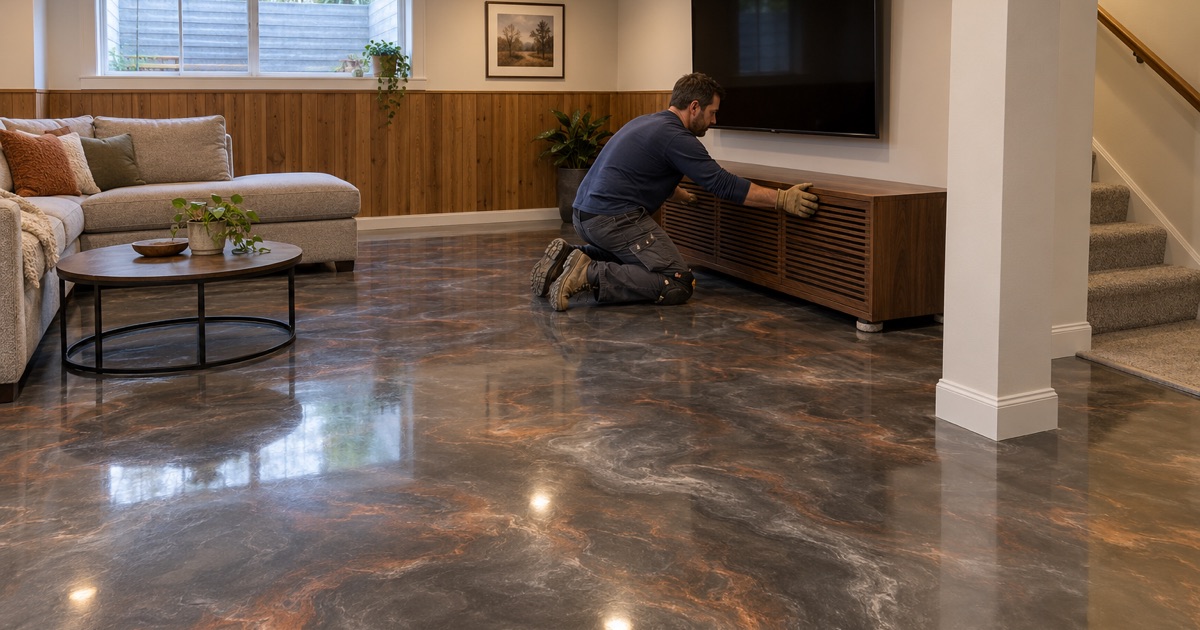
A metallic floor uses pearlescent pigments suspended in clear epoxy. As the resin is spread and worked, the pigment moves and settles into swirls, veins and pools that read like marble, poured metal or deep water. The look is unique to each floor, and so is the risk: every flaw in the slab and every hesitation in the pour shows in the final surface.
That is why we take time on the slab before we take time on the color. Every floor is diamond ground and tested for moisture, repaired and flattened where it needs it, and quoted with the product line, the number of coats and the finished thickness written down. You know exactly which layers are going into the floor before the first bucket is opened.
What Makes a Metallic Floor Different
Pigment, Movement and Depth
Metallic pigments are tiny reflective particles that float in the resin. Rolling, back-rolling, spraying with solvent and brushing all push them in different directions, creating lines and cells that catch the light. Two or three colors can be layered to add depth, with darker tones settling into the low spots and lighter ones rising to the high ones.
We show you physical samples and photos of the techniques before the job, then agree on the base color, the metallic colors and the style of movement. That conversation is part of the proposal, so the finished floor matches what was discussed rather than what an installer improvised on the day.
Why Slab Flatness Matters More
Metallic resin flows and self-levels to a degree, which means it collects in dips and thins over high spots. A slab with humps, ridges or old patches will show those shapes as color changes in the finished floor. Flake floors hide those details; metallic floors highlight them.
We grind the slab flat, fill low areas, and honor or fill joints depending on how they move. When a slab is too uneven to bring within reasonable flatness, we tell you so and suggest a self-leveling underlayment or a different system rather than a floor that will disappoint.
Working Time and the Installer’s Hand
A metallic coat has a limited working window before it begins to set. The pattern has to be built inside that window, area by area, without visible lap lines where one batch meets the next. It takes planning: where to start, how to move across the room and how many people need to work at once.
We plan the pour around the room’s shape and doorways, mix in measured batches and keep the crew working wet edge to wet edge. That is the part of the job that cannot be fixed later, so it gets the most attention.
Residential Metallic Epoxy Floors
Finished Basements and Family Rooms
On the Cook side of the village, most homes have a full or partial basement, and a metallic floor can turn that slab into a family room, bar area or theater without carpet. Before we install one, we read the floor for past water and test it, because moisture under a smooth, reflective coating shows up quickly as blisters.
Where moisture readings run high, a moisture-mitigation primer goes down first and is priced as its own line. Where a basement still takes on water, the leak has to be fixed before any coating is considered.
Garages That Double as Showrooms
Some homeowners want a garage that looks as good as the car in it. A metallic garage floor can do that, but it has to handle the same hot tires, road salt and brine as any other garage. We use a thicker base, a UV-stable topcoat and a fine slip-resistant aggregate in the final coat.
Winter salt dulls any glossy floor, so we suggest a satin topcoat for garages that see daily driving and a routine rinse once the snow season ends. A soft squeegee for winter brine keeps grit from being dragged across the finish.
Kitchens, Bars and Living Spaces
On main floors, a metallic coating can run continuously through kitchens, dining areas and bars. In those spaces we pay close attention to transitions with other flooring, to cabinet bases and to the sheen, since a high gloss shows crumbs and footprints in strong light.
We also plan for furniture and appliances. Felt pads under chairs and stools, rollers under refrigerators, and mats at the sink keep a reflective floor from collecting scratches in the places where people spend the most time.
Commercial Metallic Epoxy Floors
Showrooms and Retail Along the Corridors
Showrooms and stores along Lake Cook Road and Route 83 use metallic floors to stand out. Those floors take far more traffic than a home, so we specify a harder topcoat and plan a maintenance routine with the owner from the start.
Commercial spaces rarely close for long, and a metallic layer cannot be walked on while it cures. We phase the work by area and schedule overnight or over weekends, with dust captured at every grinder so stock and displays stay clean.
Office Lobbies and Corporate Spaces
Corporate buildings in the village’s business parks sometimes use metallic floors in lobbies, conference areas and break rooms to carry a brand color. We make a test panel first so the owner can see the color under the building’s own lighting, since metallic finishes shift with light.
Lobby floors also carry winter grit and salt from parking lots, so we pair the metallic system with walk-off mats at the doors and a topcoat that can be burnished or recoated without disturbing the color layer underneath.
Salons, Studios and Restaurants
Salons, studios and dining rooms like the seamless, polished look of a metallic floor. Where chemicals or water are common, we choose a topcoat that resists them and adjust the texture, and in a food service area we confirm the village health department’s expectations for the room before installing.
In a salon, hair color and solvent-based removers can mark some topcoats, so we test the products the business actually uses against a sample. Dining rooms get a satin finish that hides chair scuffs better than high gloss between nightly cleanings.
Our Step-by-Step Metallic Epoxy Floor Process
Step 1: Design, Testing and Proposal
We test the slab for moisture, check its flatness, map cracks and old coatings, and agree on colors and technique. The written proposal lists every layer, the coat count and the thickness, and explains what the warranty excludes, starting with moisture.
Step 2: Grinding, Repair and Leveling
The slab is diamond ground with dust captured at the machine, then cracks are filled, joints treated and low areas leveled. This is the most important day of the job, because the metallic layer will reveal every shortcut taken here.
Step 3: Primer and Base Color
A primer and a tinted base coat go down to seal the concrete and set the background color the metallic pigments will float over. We check the slab temperature and the dew point spread at the surface before mixing, since a cold, damp slab invites amine blush.
Step 4: The Metallic Coat
The metallic epoxy is mixed, poured and worked into the agreed pattern, section by section, wet edge to wet edge. Once it is down, the room is closed until the coat has leveled and cured enough to recoat.
Step 5: Topcoat and Handover
A UV-stable clear topcoat, with aggregate where grip is needed, protects the metallic layer and sets the final sheen. We walk the finished floor with you and leave written dates for foot traffic, furniture and vehicles, along with care instructions.
- 20+ Years in Business
- Moisture Test in Every Scope
- Diamond-Ground, Never Acid-Etched